


Payments leaders have had no shortage of PEM updates this year. The harder question is which ones should change your 2027 plans and budgets. We cut through the noise with the five shifts that defined South African payments in 2026.
At the beginning of the year, we shared an update on the South African Reserve Bank’s (SARB) Payments Ecosystem Modernisation (PEM) programme and its building blocks. Since then, it has moved into execution, changing who runs the payments system, who can plug into it, and how to measure success.
For payments leaders, the takeaway is simple: 2027 plans built on 2025 assumptions are already out of date. Here are the five shifts that mattered most, drawing on this year’s PEM industry dialogues, and what each means for your 2027 plans.
From rail thinking to systems thinking
In June 2026, three years after launch, PayShap passed 1 billion transactions. The rail now processes an average of 60 million transactions a month.
These volumes show the technology works and that demand is there. However, the numbers remain modest for the SARB. By comparison, Pix, launched in 2020, processed 36.3 billion transactions in the first five months of 2026, roughly 7 billion a month.
Brazil’s experience shows that driving adoption is less about launching a new product and more about systems thinking. Brazil’s central bank owns the scheme, sets the rules, and makes participation mandatory for large institutions. P2P payments are free for individuals and merchant fees are lower than card fees, incentivising some merchants to offer discounts for Pix payments. Additionally, the central bank has a Minimum Requirements for User Experience manual as part of the Pix regulation to create a consistent experience with Pix across participants.
South Africa is still largely a cash-based economy. Digital payments inclusion needs local languages, simple interfaces, and options for people without smartphones or data. To close that gap, the SARB is working on a PayShap Foundation Reset. It aims to make PayShap more consistent, secure, and affordable to drive broader adoption. To achieve this, participants can expect:
- Updated UX standards due in November 2026 and updated scheme rules in March 2027
- A new ecosystem pricing model, due in January 2027
- Volume targets and reporting from November 2026, followed by adoption monitoring
From priced product to public utility
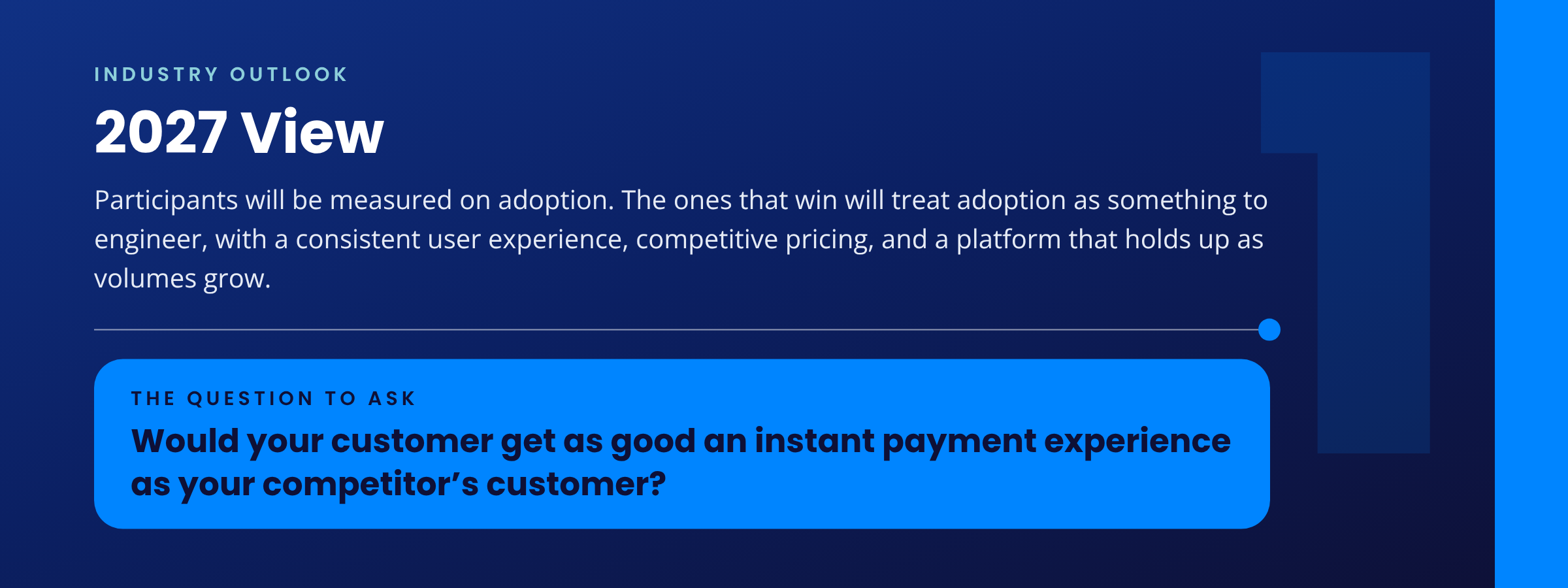
At this year’s PEM dialogues, the stated direction was that instant payments should be free to the end user and low cost for merchants, following the pricing approach of Pix and UPI. PayShap’s new ecosystem pricing model is due in January 2027.
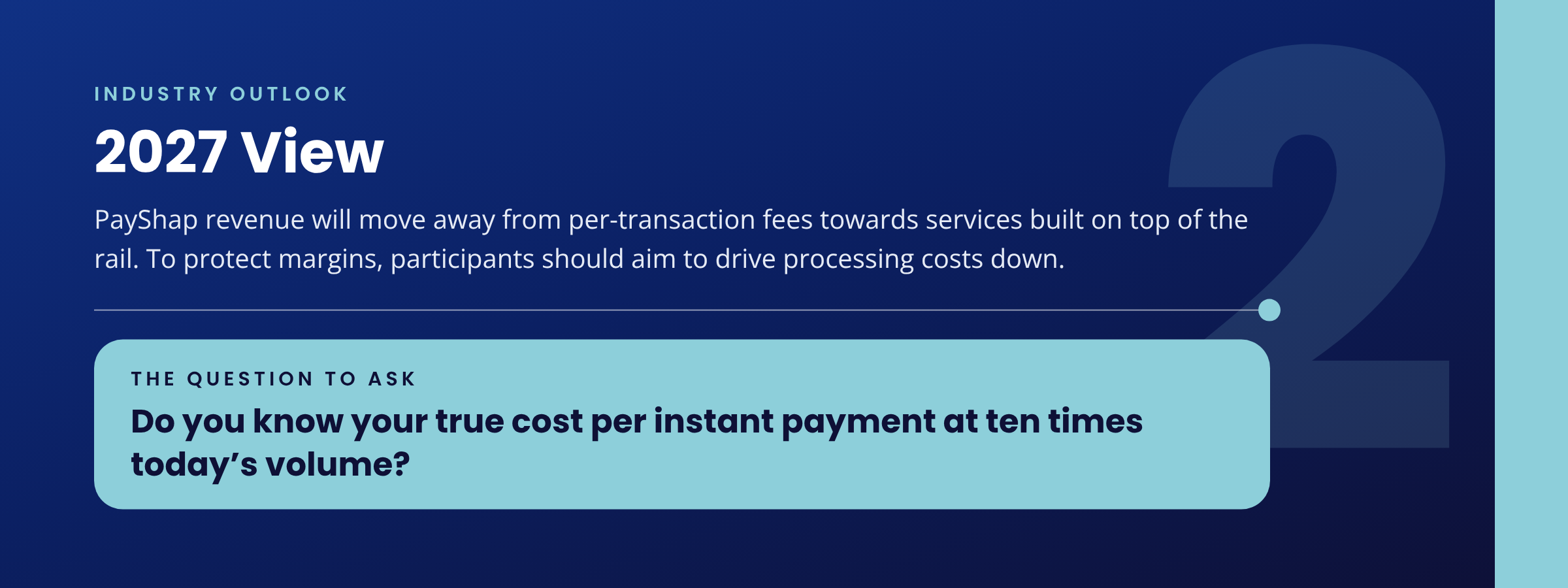
As a public utility, PayShap shifts banks from earning fees on each transaction to building competitive services on top of the rail. One option raised at the dialogues is moving participant pricing from a per-transaction fee to a fixed annual fee. If that happens, scaling volumes while keeping processing costs low becomes the main lever for profitability.
Banks should review their underlying technology and their third-party provider agreements. Rand-priced, cloud-native platforms keep transaction costs down and make new services faster to launch.
From speed to trust
Instant payment fraud increasingly relies on social engineering to get users to send money themselves. AI and deepfakes make these scams more convincing, misleading users to authorise fraudulent payments. According to the Central Bank of Brazil, 97% of Pix fraud cases are authorised push payments.
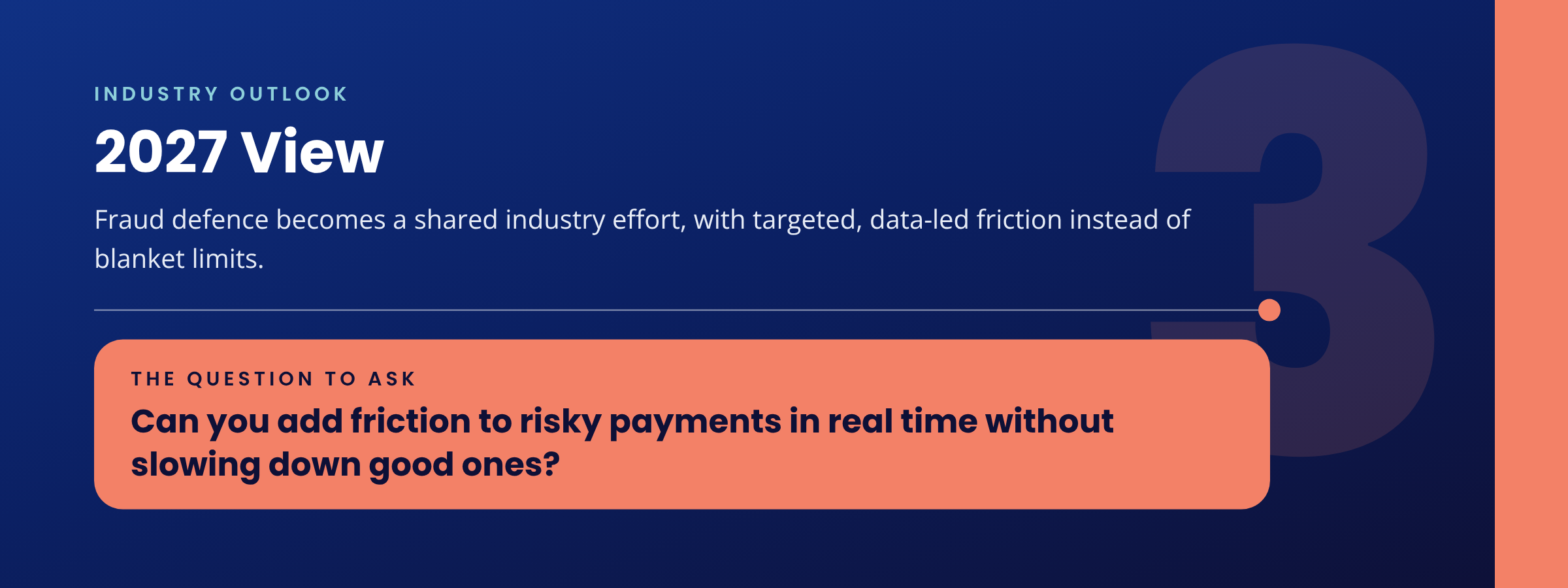
Similar patterns are identified with digital payments fraud in South Africa. The SARB recommends data-led, targeted friction: clean payments go through without interruption, while risky ones face additional checks, holds or limits that make the rails slow, costly and unattractive for fraudsters.
Bodies such as SABRIC and SAFPS already support collaboration to share data that can turn isolated signals into patterns. Additionally, through PEMKey, the SARB is testing wallet-based payment credentials that remove the need for SMS OTPs.
From consensus to mandate
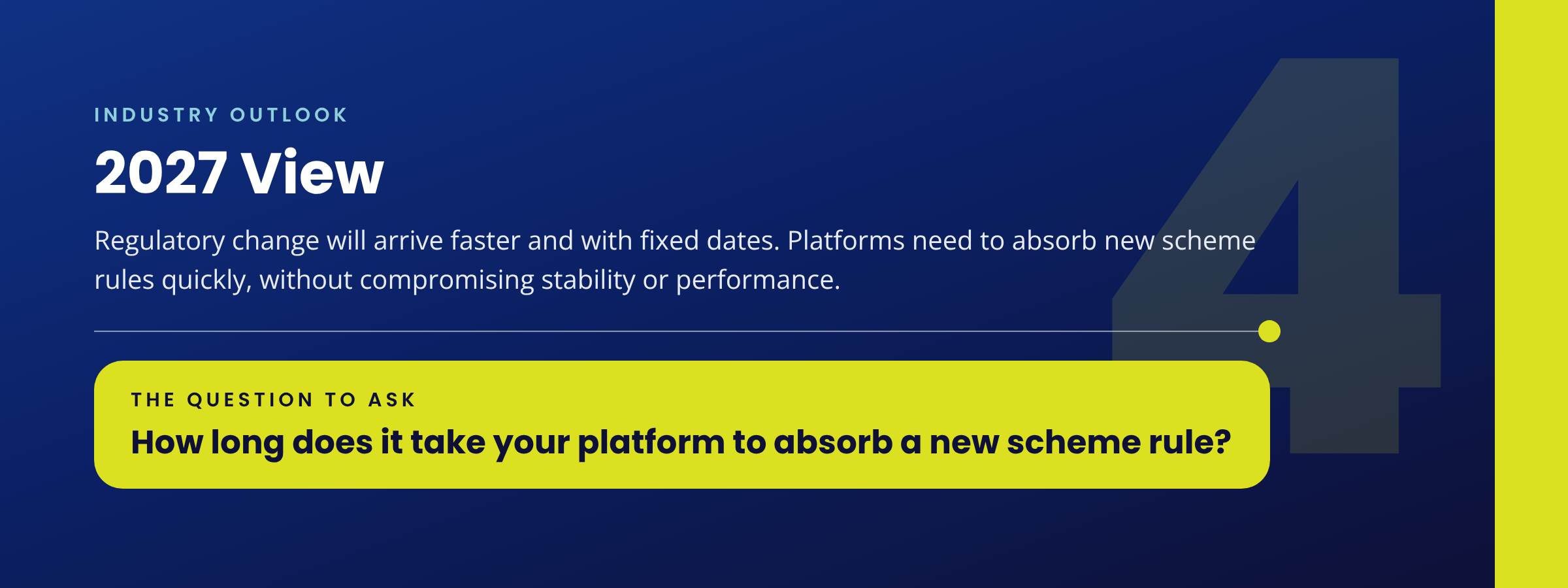
We previously covered the planned change in governance. That change has now taken effect. Payments Association of South Africa’s (PASA) recognition as the payment system management body was withdrawn on 2 September 2026, and its functions have moved to the SARB and PayInc. After three decades, the industry no longer governs the payment system through a body of its own, and decisions no longer depend on participant consensus.
The SARB now plays a more direct role, both as regulator and licensing authority and as co-owner of PayInc, the operator and scheme manager. The aim is to keep modernisation moving where a lack of participation, consensus or conflicts of interest might otherwise slow it down.
The September dialogue showed what this looks like in practice. The third and final round of consultation on the Authorisation Framework drew more than 1,000 comments, and requests for extensions were turned down.
From gatekeepers to open access
The SARB’s Exemption Notice and Authorisation Framework are due to be published in November 2026. Together, they allow non-banks to perform payment activities that the Banks Act has reserved for banks, and give them direct access to the payment system without a banking licence. The principle is “same activity, same risk, same rules”.
Fintechs and third-party payment providers will still need to meet the framework’s requirements before they are authorised. This means more regulation for non-banks, but it also means they can compete with banks directly for end users.
Payment initiation is one of the first places this will show up. The SARB set out plans to let payment initiation providers that don’t hold customer funds initiate credit transfers on PayShap directly. Licensing and a controlled go-live are planned for 2027.
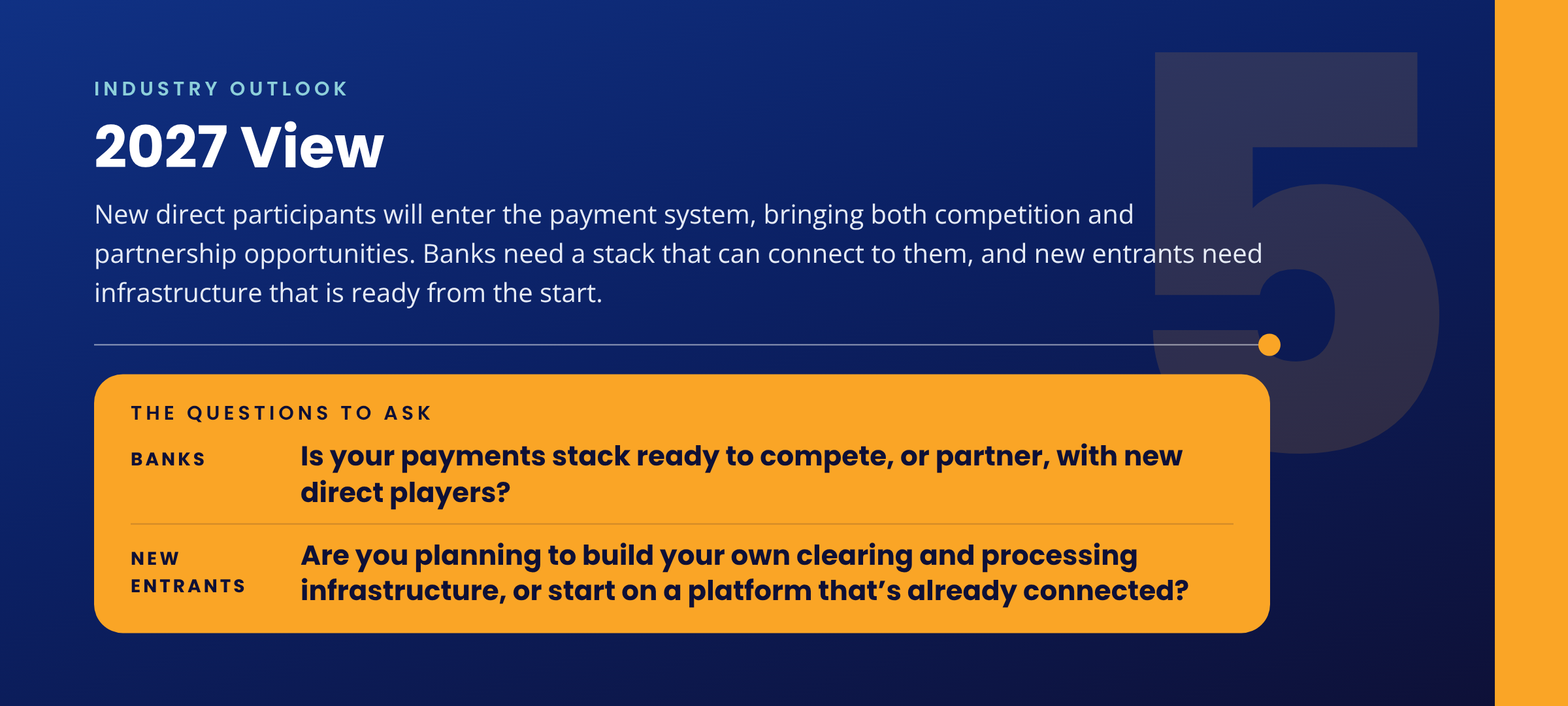
To prepare for a new competitive landscape, some banks have chosen to partner with fintechs, which requires a payments stack that is ready to integrate with them. On the other side, fintechs that want direct participation need clearing and processing infrastructure from day one.
What the five shifts have in common
In 2026, PEM moved from plans to practice:
- PayShap is entering an adoption-focused reset. Banks will be tracked on usage, so platforms need to handle growing volumes and meet more prescriptive user experience standards.
- PayShap is moving towards a public utility model. The transaction itself will earn little, so margin depends on low transaction costs and how quickly new services can be added.
- Fraud defence is becoming a shared, data-led effort. Participants will need to spot risk in real time and use shared data, without slowing down good payments.
- Regulatory change is arriving faster and with fixed dates. Platforms need to absorb new scheme rules quickly, without compromising stability or performance.
- Non-banks are gaining direct access to the payment system. Participants with payment stacks that are ready to connect will be better placed to compete with, or partner with, new players.
Each shift points to the same requirement for 2027: a payments platform that can keep up.
Electrum helps participants modernise clearing house payments without a rip-and-replace or starting from scratch. Our cloud-native, modular, API-first solution offers a single, simplified integration for all payment schemes, allowing you to launch new services quickly and respond to regulatory changes with agility.
Talk to us about getting your payments platform ready for 2027.